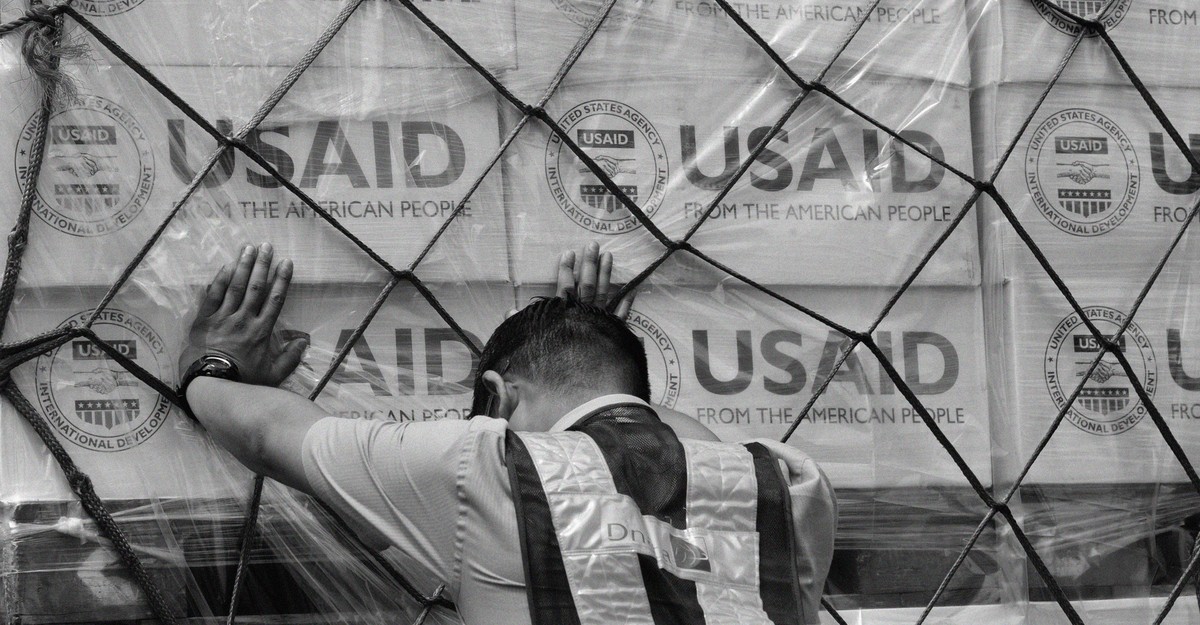
Last summer, the Dalai Lama was having a party in Dharamshala for his 90th birthday, and Bethany Morrison, a newly appointed State Department official, was eager to meet with him there. Inconveniently, the United States had recently canceled about $12 million worth of annual foreign aid benefiting Tibetan-exile communities as part of the implosion of USAID. This, Morrison and other State officials thought, would not make a particularly good impression on His Holiness, according to a former State and a former USAID official.
Prior to the Dalai Lama’s birthday, the two former federal employees told me, they had spent months lobbying for Donald Trump’s administration to restore at least some Asia-based aid projects. They had argued that these projects passed Secretary of State Marco Rubio’s new litmus test for overseas spending: They would make America “safer, stronger, and more prosperous.” Nothing changed. (Like other aid workers I spoke with for this story, the former employees requested anonymity because of fear of professional reprisal.)
But as the party’s date approached, Jeremy Lewin, the new head of U.S. foreign assistance at the State Department, was suddenly persuaded to resurrect aid to Tibetans, and had seemingly little regard for where, exactly, the money would be going, the former employees said. In a June email to other State Department officials, Lewin wrote that he wanted to “give some good news ahead of the trip.” Days before the party, the State Department allocated nearly $7 million to support Tibetan exiles in South Asia. (A State Department spokesperson, who did not give their name, told me in an email that many programs were paused in early 2025 as part of a foreign-assistance review “conducted to ensure that the American taxpayer’s hard-earned dollars were being spent efficiently” but decl
Continue Reading on The Atlantic
This preview shows approximately 15% of the article. Read the full story on the publisher's website to support quality journalism.