Sign up for our newsletter about national security here.
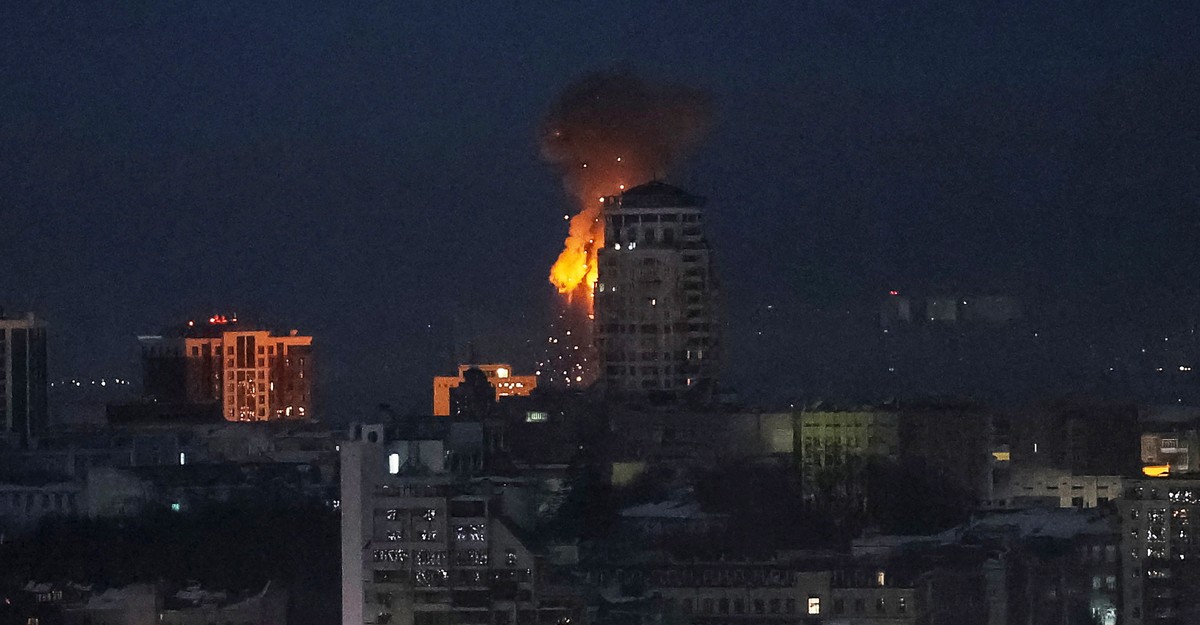
At about two this morning, the familiar howl of air-raid sirens woke me in the center of Kyiv, followed by the low thuds of anti-aircraft cannons attempting to shoot down Russian drones. The news alerts followed, citing the city’s mayor: Russian strikes had left more than 1,000 apartment buildings without power and heat as temperatures fell below zero degrees Fahrenheit.
Vladimir Putin was not going to miss his chance to use winter as a weapon. In recent weeks, Russian missile strikes have hammered the power grid and neighborhood heating systems, leaving both on the verge of collapse. Last week, President Trump appealed to Putin to pause these attacks for a week, long enough for the cold snap to pass and peace talks to move forward. Putin initially appeared to acquiesce—then launched one of the worst attacks on Ukraine’s energy network since the start of the war.
No one I met in Kyiv over the past few days expected anything different. As the Russian invasion of Ukraine approaches the four-year mark this month, Putin’s strategy has shifted to one that stands in blatant violation of the international laws of war, which prohibit the bombing of civilian infrastructure.
Continue Reading on The Atlantic
This preview shows approximately 15% of the article. Read the full story on the publisher's website to support quality journalism.