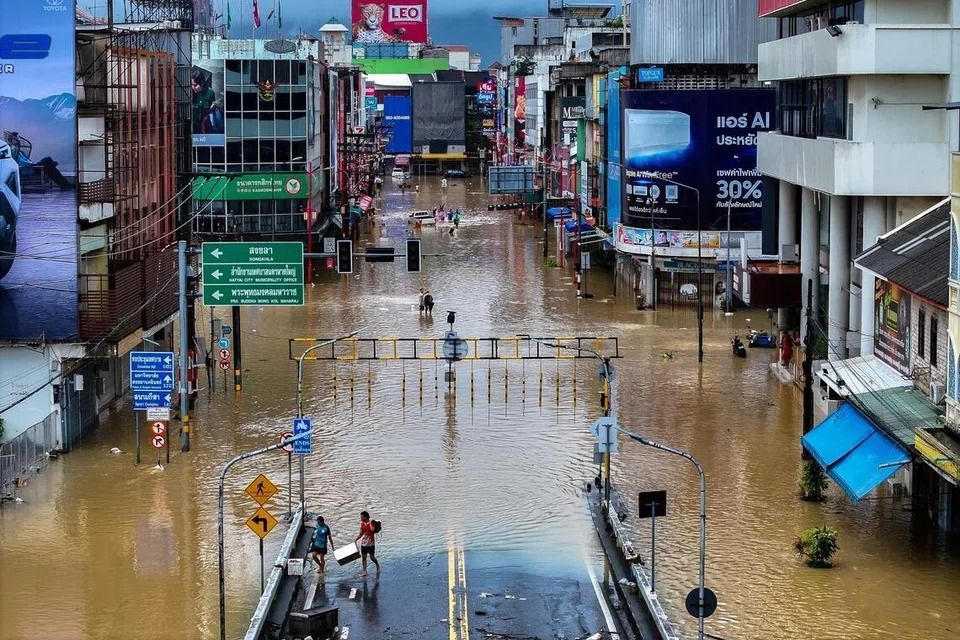
HAT YAI/UBON RATCHATHANI: Hat Yai is a city slowly getting back on its feet. Two months after torrential monsoon rains turned streets into raging rapids and submerged much of the southern Thai city, many downtown shopfronts are finally just reopening after weeks of pressure-washing, mopping and scrubbing. Others remain shuttered, their windows still caked with silt and debris. On many buildings, brown watermarks etched 2m to 3m high offer a blunt reminder of how far the flood waters rose.
In Hat Yai’s central market, dried fruit and nuts vendor Marisa Wangbenmat was among those who rushed to clean up and reopen, hoping to recoup losses as quickly as possible. She spent more than a month and one million baht (S$40,480) replacing stock after losing about 80 per cent of her goods to the floods.
Dried fruits and nuts vendor Marisa Wangbenmat in front of her stall in Hat Yai's central market. - ST PHOTO: PHILIP WEN
But while the streets this time of year are usually thronging with customers from Malaysia, Singapore and other parts of Thailand, the tourists have yet to return.
“Now I’m only selling about 10 per cent of what I normally do,” Marisa said. Even so, she is better off than some others. “Most of the other shops haven’t reopened because they don’t have the money.”
The catastrophic floods that battered southern Thailand in late November killed at least 145 people, affected nearly three million more, and inflicted economic damage exceeding 500 billion baht, according to finance ministry estimates.
As businesses and households struggle to recover, the disaster has only compounded Thailand’s deep economic and political malaise as it heads into a general election on Feb 8. After a year marked by natural disasters, regional tensions and political upheaval, voters are being asked which party is capable of breaking a cycle of crisis and policy drift.
Fault lines
In 2025, Thailand’s capital was rocked by a major earthquake, its north-eastern border provinces were drawn into deadly conflict with Cambodia, and its international reputation was damaged by headlines highlighting its role as a gateway for human trafficking into forced labour scam compounds in the region, particularly in Myanmar.
Taken together, the succession of shocks has weighed on foreign investor sentiment, tourism and consumer confidence, aggravating longstanding weaknesses in an economy already struggling to regain momentum.
In January 2026, Thailand’s Ministry of Finance downgraded its 2025 gross domestic product (GDP) outlook to 2.2 per cent – from an October projection of 2.4 per cent. This not only represents slower growth from the 2.5 per cent recorded in 2024, but fell short of a World Bank projection of 2.9 per cent at the start of 2025.
The kingdom’s weak economic growth stands in contrast to that of its neighbours, several of whom have recorded better-than-expected GDP figures despite t
Continue Reading on The Star Malaysia
This preview shows approximately 15% of the article. Read the full story on the publisher's website to support quality journalism.