Someone is shot, and almost dies; the fragility of life is intimately revealed to him. He goes on to have flashbacks of the event, finds that he can no longer relax or enjoy himself. He is agitated and restless. His relationships suffer, then wither; he is progressively disturbed by intrusive memories of the event.
This could be read as a description of many patients I’ve seen in clinic and in the emergency room over the years in my work as a doctor: it’s recognisably someone suffering what has in recent decades been called PTSD, or post-traumatic stress disorder. But it isn’t one of my patients. It’s a description of a character in the 7,000-year-old Indian epic The Ramayana; Indian psychiatrist Hitesh Sheth uses it as an example of the timelessness of certain states of mind. Other ancient epics describe textbook cases of what we now call “generalised anxiety disorder”, which is characterised by excessive fear and rumination, loss of focus, and inability to sleep. Yet others describe what sounds like suicidal depression, or devastating substance addiction.
Research tells us that the human brain hasn’t changed much in the past 300,000 years, and mental suffering has surely been with us for as long as we have experienced mental life. We are all vessels for thoughts, feelings and desires that wash through our minds, influencing our mental state. Some patterns of feeling are recognisable across the millennia, but the labels we use to make sense of the mind and of mental health are always changing – which means there’s always scope to change them for the better.
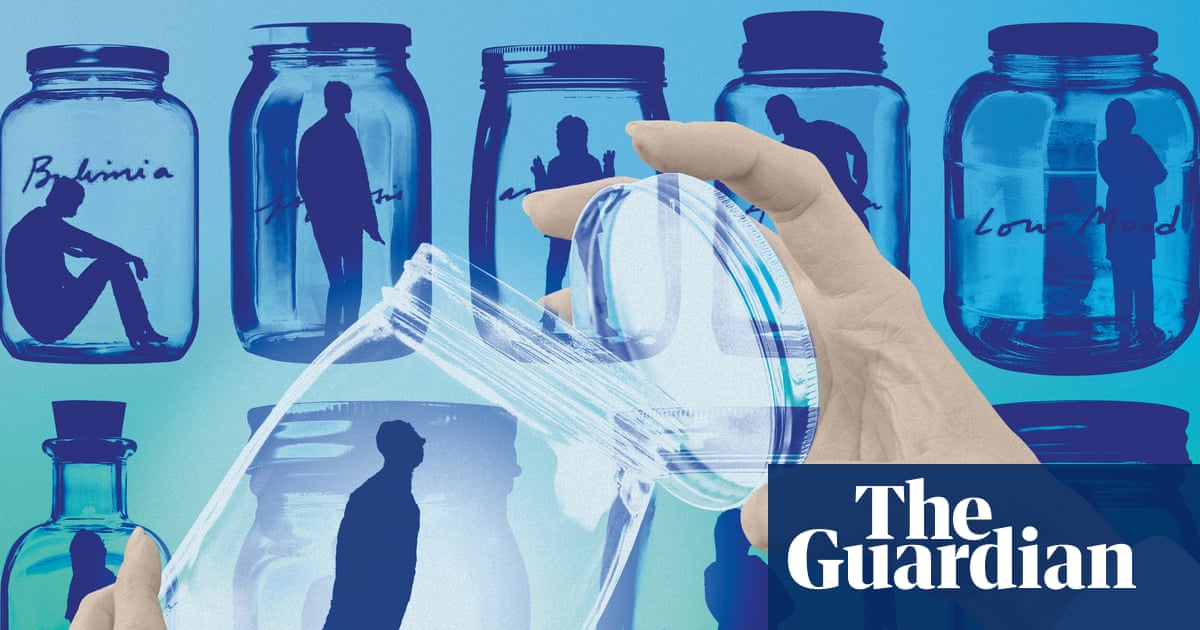
The subject is important, because according to modern psychiatric definitions, the 21st century is seeing an epidemic of mental illness. The line between health and ill-health of the mind has never been more blurred. A survey in 2019 found that two-thirds of young people in the UK felt they have had a mental disorder. We are broadening the criteria for what counts as illness at the same time as lowering the thresholds for diagnosis. This is not a bad thing if it helps us feel better, but evidence is gathering that as a society it may be making us feel worse.
We have developed a tendency to categorise mild to moderate mental and emotional distress as a necessarily clinical problem rather than an integral part of being human – a tendency that is new in our own culture, and not widely shared with others. Psychiatrists who work across different cultures point out that, in many non-western societies, low mood, anxiety and delusional states are seen more as spiritual, relational or religious problems – not psychiatric ones. By making sense of states of mind through terms that are embedded in community and tradition, they may even have more success at incorporating our crises of mind into the stories of our lives.
In the US, it’s common to classify mental distress according to the Diagnostic and Statistical Manual of Mental Disorders (DSM), which is now in its fifth edition. In the UK and Europe, it’s more common to use the International Classification of Diseases (ICD), now on its 11th revision. Both have seen huge expansions in recent decades, classifying more and more distressing feelings and emotions as pathological.
Continue Reading on The Guardian
This preview shows approximately 15% of the article. Read the full story on the publisher's website to support quality journalism.