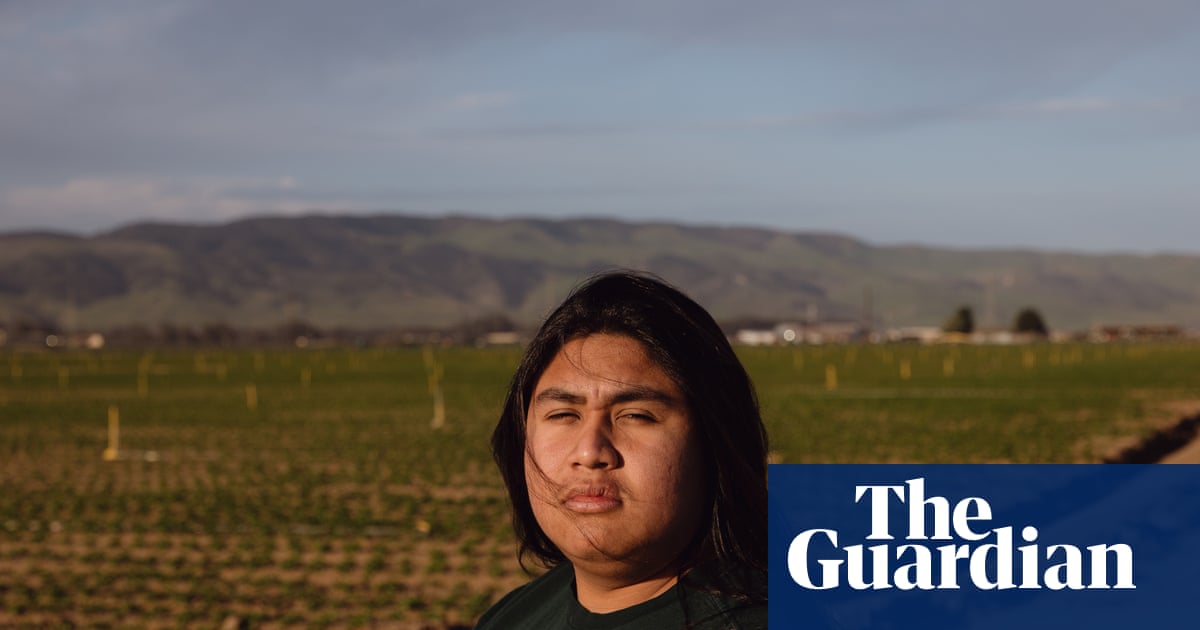
While most 18-year-olds worry about college papers and spring break plans, Cesar Vasquez drives through coastal California farm towns scanning for unmarked SUVs before dawn. He flips down his driver’s seat visor to look at a taped list of license plates he has already identified as Immigration and Customs Enforcement (ICE) vehicles, and jots down a few new ones he suspects could be. His phone buzzes constantly – tips from neighbors, text chains from volunteers alerting to ICE activity – all in an attempt to keep his community safe from being swept up in federal agents’ widening dragnet.
This is what organizing looks like for this son of undocumented immigrants. In his home town of Santa Maria, a small farming town on California’s central coast where over 80% of farm workers are undocumented, Vasquez has become both a crucial community lifeline and a known target of federal immigration enforcement.
View image in fullscreen Outside the ICE office in Santa Maria, California, Cesar Vasquez and a group of activists gather to decide who will patrol each neighborhood.
Vasquez began volunteering with the 805 Immigrant Rapid Response Network as a high school senior. Last August, he was hired full-time as a rapid response organizer, covering North Santa Barbara and San Luis Obispo counties, overseeing volunteers, supporting families and tracking ICE activity.
Routinely, he visits the families of detained immigrants. “There have been so many occasions where I walked through the door, and a kid was expecting their father
Continue Reading on The Guardian
This preview shows approximately 15% of the article. Read the full story on the publisher's website to support quality journalism.