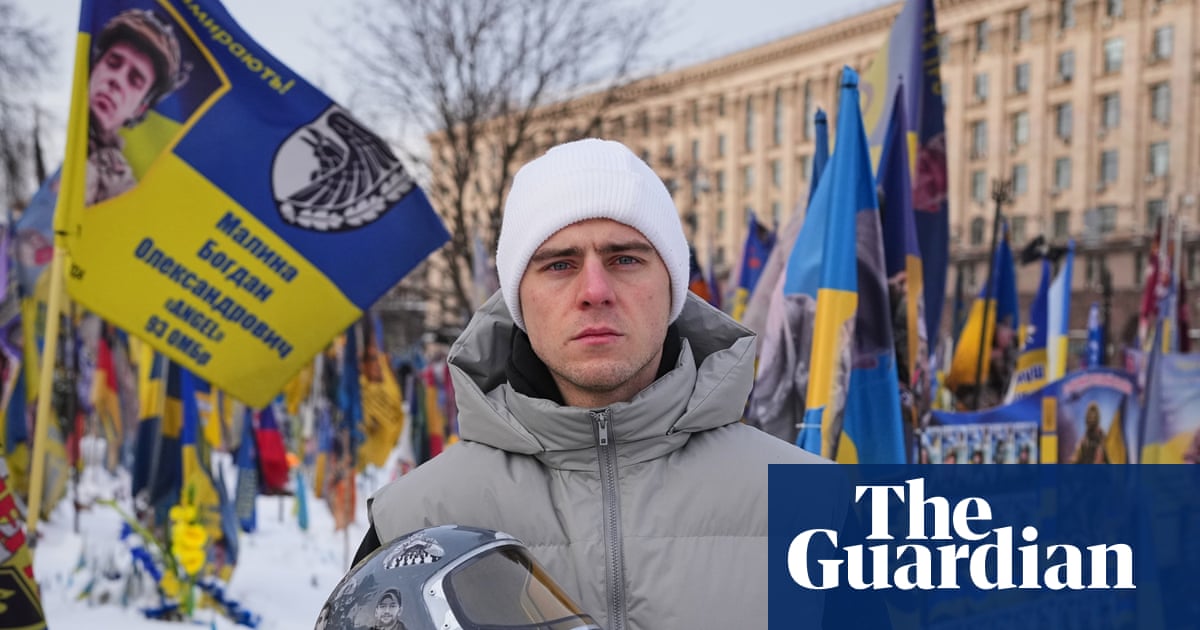
It is the image that will forever define the 2026 Winter Olympics: a Ukrainian skeleton racer, stoic and unbowed, holding a helmet bearing the faces of 24 athletes killed by Russia. Behind him, the icy track serves as a reminder of the dreams he sacrificed for a greater purpose.
It was an extraordinary act of bravery and defiance, which carried the tremors of Tommie Smith and John Carlos’s civil rights protest in 1968. But in his first in-depth interview since being disqualified from the Milano Cortina Games, Vladyslav Heraskevych makes one thing clear: he has unfinished business with the Olympics.
He doesn’t just intend to race when the Games return in the French Alps in 2030. He also plans to win a gold medal wearing the same “helmet of memory” that got him banned this month.
“I deeply love the sport of skeleton,” he says. “And I want to come back and compete in the Olympics. First of all, we need to appeal in another court which is not under control of the International Olympic Committee. Our goal is to win this case. Then I want to come in Olympic competitions with the same helmet. And, of course, to win a gold medal.”
Heraskevych is now back in Kyiv after a tumultuous fortnight during which he made global headlines, was awarded the order of freedom by Ukraine’s president, Volodymyr Zelenskyy, and was gifted $200,000 by Rinat Akhmetov, the Shakhtar Donetsk president – equivalent to the amount given to Ukrainian gold medallists at an Olympics.
Many also praised his heroism, but Heraskevych is
Continue Reading on The Guardian
This preview shows approximately 15% of the article. Read the full story on the publisher's website to support quality journalism.