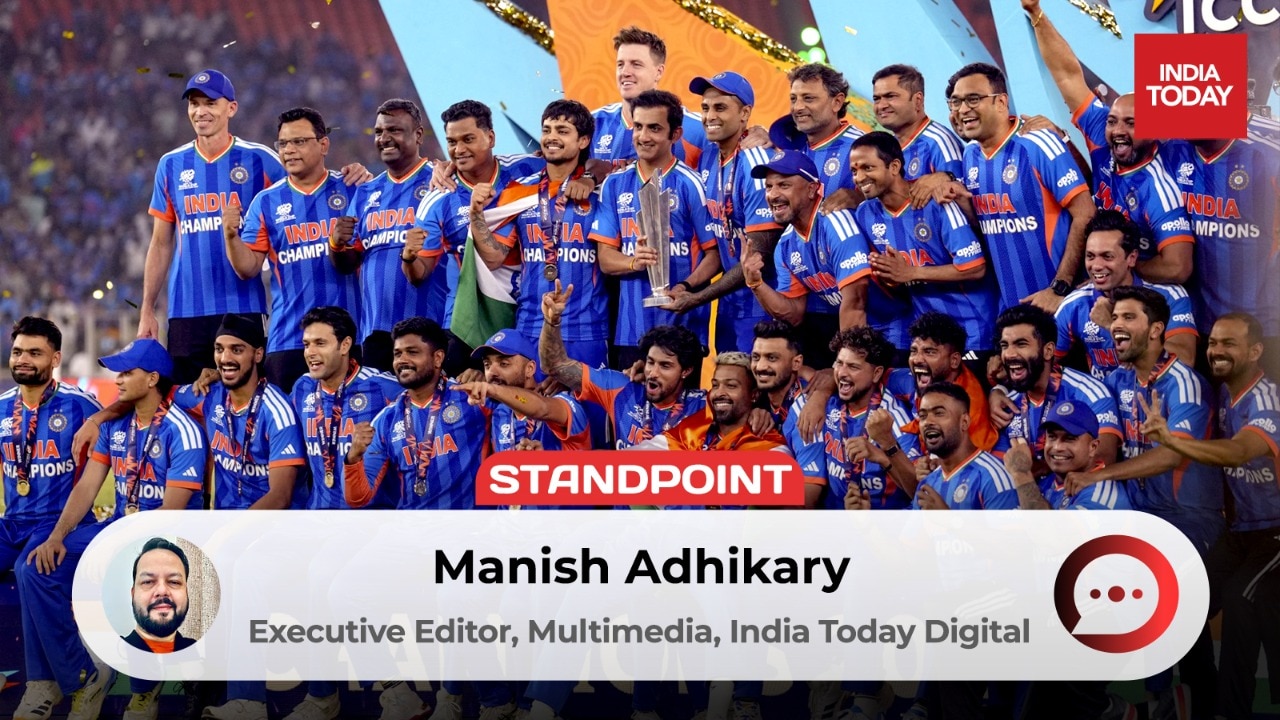
India won the T20 World Cup on Sunday. And a strange thing happened across social media: people started asking why it didn't feel like it used to. The answer has almost nothing to do with cricket.
Two tweets appeared within minutes of each other after India lifted the T20 World Cup trophy. One read: "this win isn't even 1% of that" followed by a clip from the 2011 final. Another said: "It's also to do with the format and World Cup frequency. Biennial isn't that special any more."
Read Full Story
Both observations are correct. But they are symptoms of a much larger shift – one that cuts through economics, psychology, post-colonial theory, and the strange inner life of a nation that is no longer sure it needs sport to tell it who it is.
THE TREADMILL THAT GOES NOWHERE
Indian fan celebrates T20 World Cup triumph in Mumbai (PTI Photo)
The first explanation is the most intuitive, and it comes from behavioural economics. In 1971, psychologists Philip Brickman and Donald Campbell published a paper titled Hedonic Relativism and Planning the Good Society, introducing what is now widely known as the hedonic treadmill. The central finding was simple: humans adapt to positive experiences. The joy produced by any given event diminishes with repetition, regardless of the event's objective quality. What felt extraordinary the first time feels ordinary by the fifth.
India has won four ICC titles in the last five years. Research on the physiology of sports fandom has confirmed that watching your team win triggers dopamine release comparable to personal achievement.
Continue Reading on India Today
This preview shows approximately 15% of the article. Read the full story on the publisher's website to support quality journalism.