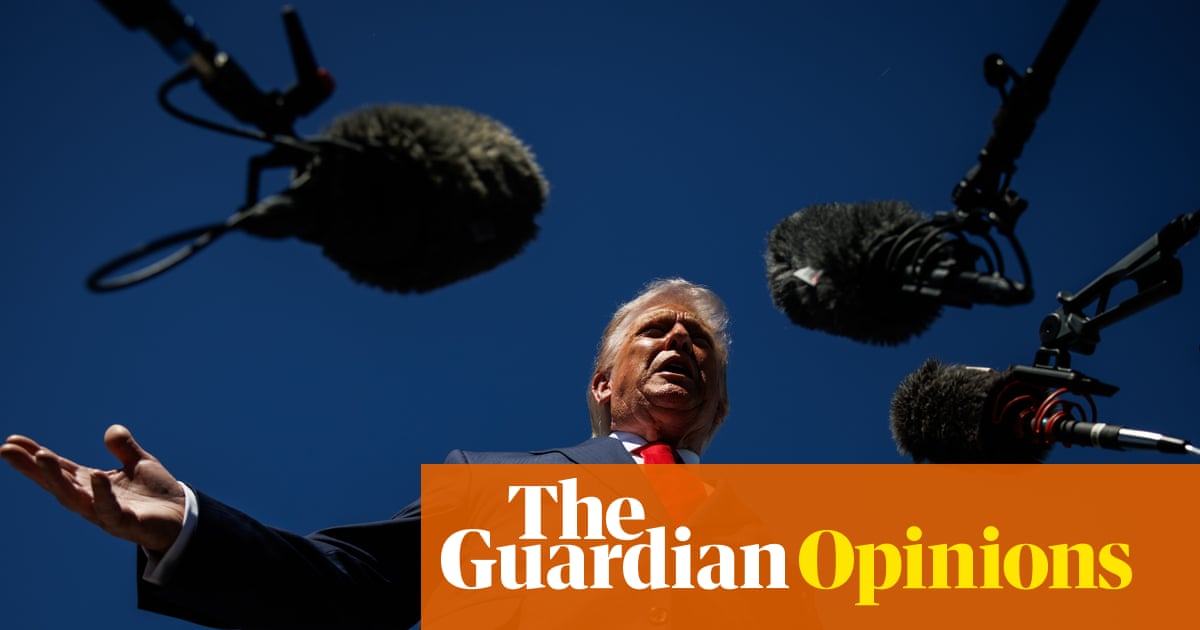
To confront Donald Trump is to engage in asymmetric warfare. It is to enter a battlefield that is not level, where he enjoys an immediate and in-built advantage over those who would oppose him or merely hold him to account. That fact has cost Democrats dearly over the past decade – exacting a toll again this very week – but it has now upended an institution central to Britain’s national life: namely, the BBC.
The key asymmetry can be spelled out simply. Trump pays little or no regard to the conventional bounds of truth or honesty. His documented tally of false or misleading statements runs into the tens of thousands: the Washington Post registered 30,573 such statements during Trump’s first term in the White House, an average of 21 a day. In a single interview with CBS’s 60 Minutes earlier this month, Trump spoke falsely 18 times, according to CNN.
To hold him to account for this dishonesty is to cast yourself as an arbiter of truth, which creates the instant and obvious expectation that you yourself must be truthful. Here, then, is the asymmetry: he can lie, but his critics cannot.
So he can continue to tell the big lie, claiming against all evidence that he won the 2020 election, and myriad smaller lies – he told 60 Minutes that grocery prices “are down” when t
Continue Reading on The Guardian
This preview shows approximately 15% of the article. Read the full story on the publisher's website to support quality journalism.