The curious case of why Poundland is struggling during a cost-of-living crisis
3 hours ago Share Save Emma Simpson Business correspondent Share Save
BBC
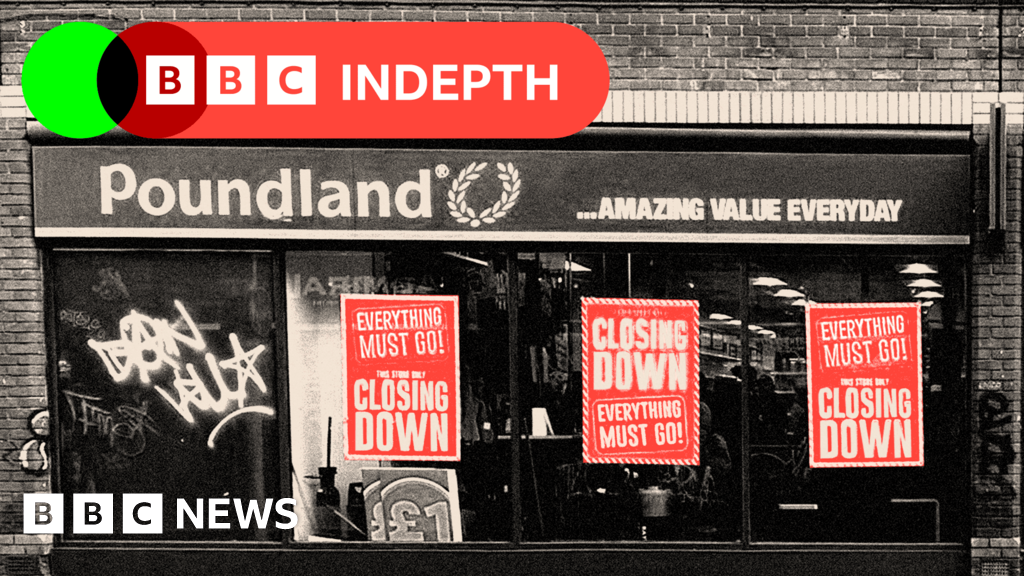
The residents of Peckham in south London have just lost their Poundland store, which closed this week after 11 years of trading. "Everyone comes in here, it's very cheap. I buy stuff for my kids, snacks, toiletries," says passing shopper Becky Cullen, staring at the empty shop. "It was always busy... Where are we going to shop now?" The store was on Rye Lane, a lively high street where Caribbean grocers stack yams next to beauty and phone repair shops. There are bars, cafes and the odd hip vintage shop. But Peckham still has high levels of deprivation and as such it is just the sort of place where a bargain shop should be booming in a cost-of-living crisis. Instead Poundland has found itself running a store closure programme as it tries to secure its future on the high street.
Rye Lane in south London - a lively, multicultural high street - is losing its pound shop, after 11 years of trading
More than 100 of its shops have either shut or been earmarked for closure since the summer. That's after the business was sold in June for a nominal £1 amid "challenging trading conditions". It does have a turnaround plan but by the end of the process, Poundland expects to end up with between 650 and 700 shops, compared with the 800-odd it had at the start of this year. Elsewhere on UK high streets, the Original Factory shop is struggling and has shut at least 22 shops. Maxideal, a small discount chain, has closed altogether. And B&M Bargains, one of the UK's biggest discount chains, has launched a turnaround plan due to weak sales. These places should in theory be the destinations of choice for people who are trying to spend less on everyday goods, or trading down from more expen
Continue Reading on BBC News
This preview shows approximately 15% of the article. Read the full story on the publisher's website to support quality journalism.