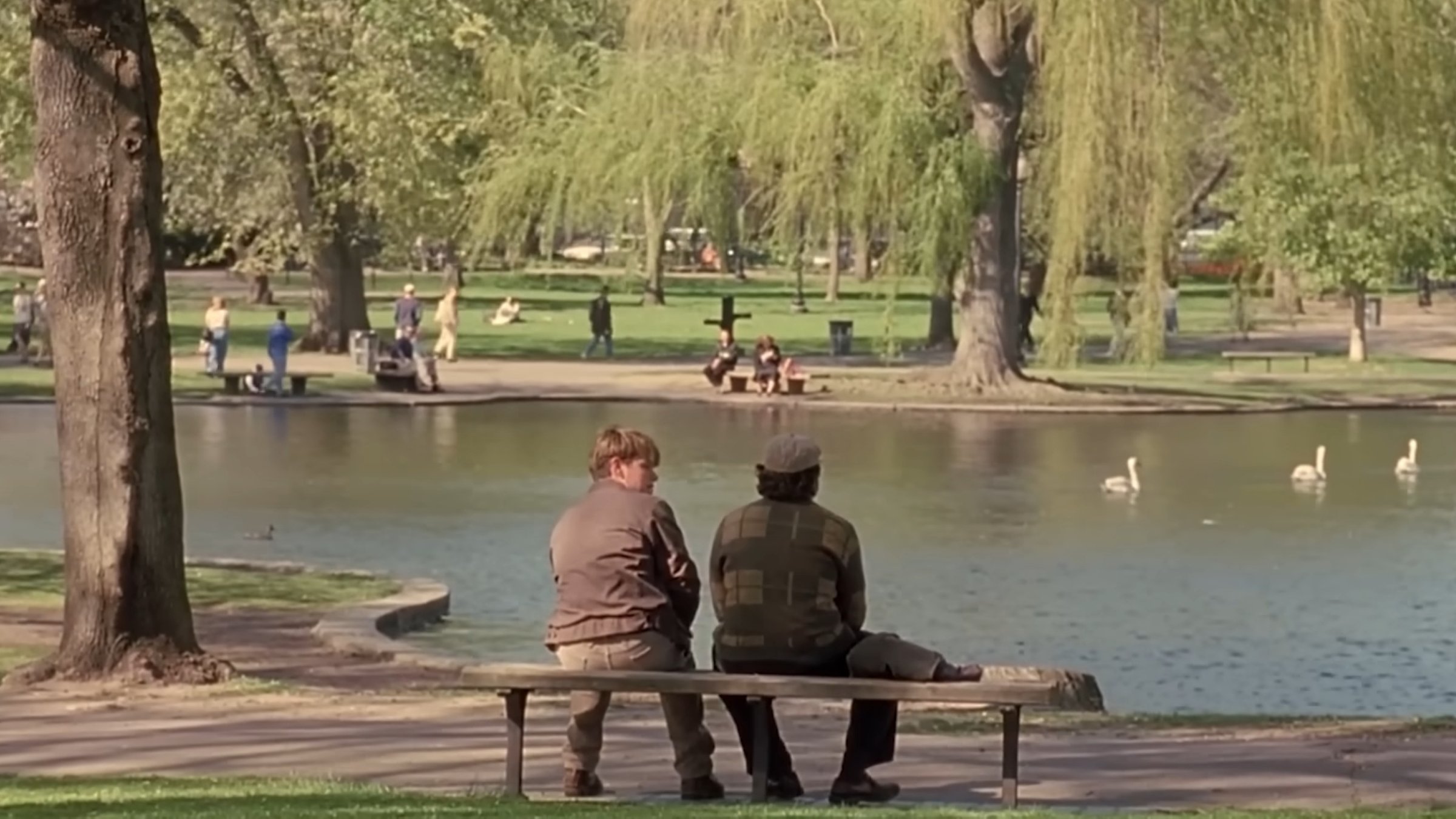
Will, who suppresses his mathematical genius beneath the scars of his emotional trauma, demonstrates the courage to seek freedom, authenticity and self-reconstruction. His therapist, Sean, prioritizes life experience over mere knowledge. This masterpiece unites the trauma underlying the myth of genius with the transformative power of human relationships, offering both a visual and cognitive feast.
Gus Van Sant’s "Good Will Hunting" may, on the surface, appear to simply portray the narrative of a “young man trying to find his life,” yet it conveys the fragility and tension of the human psyche alongside the paradoxical nature of genius, as if across a bridge of glass. Representing one of modern American cinema’s most compelling depictions of inner conflict, the film exposes the dark residues trauma leaves on individual memory and the tragic aesthetics of internal entrapment woven with denied potential. A central aspect of the film’s structural integrity is its near-clinical depiction of post-traumatic identity formation, as well as Will Hunting’s relentless, dynamic struggle with his own intellect.
While one might expect Will’s genius to liberate him, he instead entraps himself within the invisible chains forged by childhood trauma. Simultaneously, the narrative demonstrates how an individual can incorporate even cognitive superiority into a collapsed defensive
Continue Reading on Daily Sabah
This preview shows approximately 15% of the article. Read the full story on the publisher's website to support quality journalism.