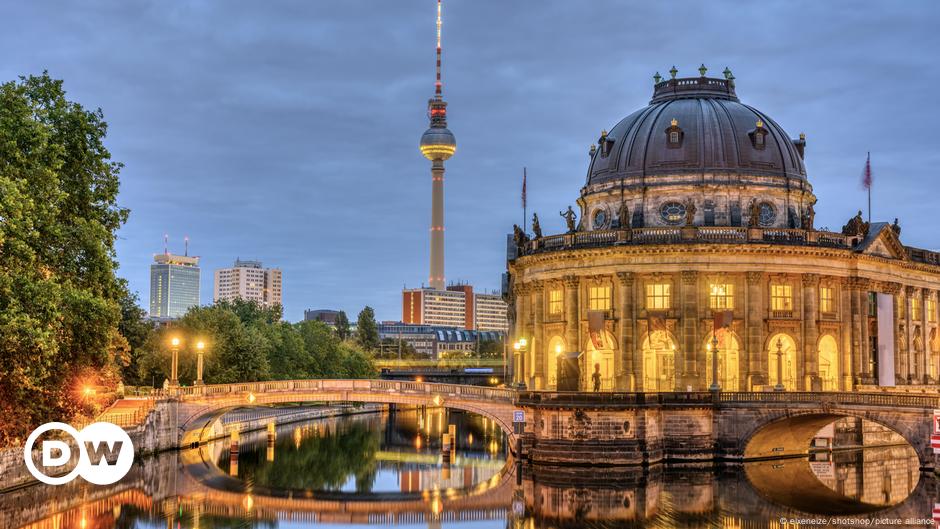
Initiated 200 years ago, Museum Island was in ruins after World War II. Then the UNESCO World Heritage site was reborn thanks to a master plan.
Berlin's Museum Island uniquely encapsulates Germany's modern history — from the ideas of the Enlightenment to the destruction of World War II, from the Cold War era to its current ultra-modern restoration that has turned the ensemble of museums into a tourist magnet.
Standing as a testimony to Europe's architectural and cultural developments, the historical complex of museum buildings was recognized by UNESCO in June 1999 as a World Heritage Site , and this year it is celebrating its 200th anniversary since the first building's foundation stone was laid.
#DailyDrone: The Museum Island Berlin To view this video please enable JavaScript, and consider upgrading to a web browser that supports HTML5 video
A legacy of the Enlightenment
During the Napoleonic Wars (1803–1815), when the French invaded the historic German kingdom of Prussia, many artworks were plundered from its capital, Berlin. When the looted works were returned after the war, Prussian leaders decided to create a museum to showcase the treasures publicly.
The Altes Museum (Old Museum) was the first building in the series of five institutions that would later become known as Museum Island. Simply called the "Museum" in its early years, the Altes Museum's foundation stone was laid in 1825, and it opened in
Continue Reading on Deutsche Welle
This preview shows approximately 15% of the article. Read the full story on the publisher's website to support quality journalism.