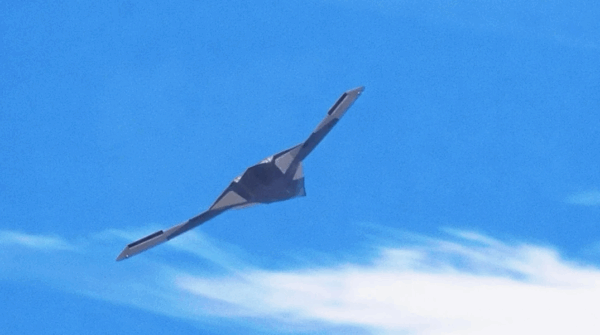
China recently unveiled two large unmanned aerial vehicles (UAV), which have been unofficially designated as the “WZ-X” and “GJ-X” by China military watchers. The UAVs’ intended roles could include strategic reconnaissance and strike, offering Beijing unprecedented options in the coming decade.
China has accelerated development and testing of a growing number of advanced tailless flying wing-type UAVs, such as the Hongdu GJ-11 and its naval version, the GJ-21, as well as CASC CH-7. This trend is instructive of Chinese industry’s advances in autonomy and aeronautical design. More than that, it offers critical insights into the People’s Liberation Army Air Force’s (PLAAF) vision of its future airpower strategy.
China has worked on a next-generation manned bomber, known as the H-20, to replace the venerable H-6 fleet for a long time. Despite occasional rumors surfacing about the type’s imminent release over the years, no official or leaked (real) images of the actual design have emerged to date. Most recently, a video showing an alleged first flight of the H-20 made the rounds in social media but was quickly proven fake.
The recently released images of the two large UAVs may be at least a partial reason for the continuing absence of the H-20. China may have decided to either scrap the H-20 bomber program or hedge its bets in favor of unmanned penetrating bombers amid rapid advances in autonomy and aeronautical design and manufacturing.
Continue Reading on The Diplomat
This preview shows approximately 15% of the article. Read the full story on the publisher's website to support quality journalism.