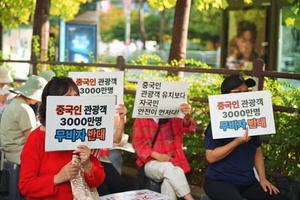
This is the first in a series of articles exploring how key foreign and security issues are politicized, and the costs this carries for South Korea’s national interest. - Ed.
Last October, South Korea saw a surge in anti-China street rallies, complete with “Korea for Koreans” placards, “China out” chants and MAGA-style symbolism, fanning public anxiety and political division. However, the rallies spotlighted a deeper challenge for South Korea: the politicization of foreign policy, where international issues are increasingly folded into domestic political mobilization.
Foreign media reports at the time described the demonstrations as escalating at an especially sensitive moment — just days before South Korea hosted the Asia-Pacific Economic Cooperation summit in Gyeongju from Oct. 31 to Nov. 1 and as Chinese President Xi Jinping was set to attend related events.
In response, South Korean President Lee Jae Myung publicly warned that the protests were “self-destructive,” saying they could damage national interests and South Korea’s international image, while Chinese Ambassador Dai Bing criticized what he described as fabricated narratives such as “Chinese election interference” being used for domestic political purposes.
The episode underscores a growing pattern in which diplomacy — and public sentiment toward foreign countries — is being weaponized in
Continue Reading on The Korea Herald
This preview shows approximately 15% of the article. Read the full story on the publisher's website to support quality journalism.