Seoul eyes humanitarian cooperation on historical issues, including joint probe into Chosei coal mine accident
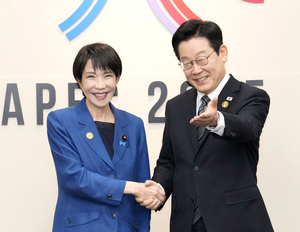
The central question in the Seoul-Tokyo summit set for Tuesday in Nara, in Japan's Kansai region, will be whether the two leaders can clear a basic hurdle by carving out a workable opening for substantive talks on expanding trade ties and managing long-fraught historical issues.
That proposition will unfold on two tracks: Seoul's bid to join a Japan-led regional free-trade pact as a pathway to future-oriented economic cooperation and a parallel effort to approach deep-seated historical disputes.
What gives added weight to the summit between President Lee Jae Myung and Prime Minister Sanae Takaichi is the regional geometry. In addition to the shared challenge of escalating North Korean threats, Korea faces rising China-Japan tensions over Taiwan, now spilling into arenas well beyond security, including supply chains.
The Lee-Takaichi meeting also comes just after Lee's summit with Chinese President Xi Jinping on Jan. 5 in Beijing.
The strains have sharpened since Takaichi's remarks in November suggesting Japan could invoke collective self-defense and deploy the Self-Defense Forces if China used force against the island. Taiwan is self-governed but claimed by China, which has never renounced the use of force to "reunify" it.
"President Xi Jinping seems to have invested significant effort in pulling South Korea closer to China. Prime Minister Takaichi, for her part, is also likely to press strongly to bring Korea onto Japan's side amid the front lines of China-Japan tensions," Lee Won-deog, a professor of Japanese studies at Kookmin University, told The Korea Herald.
"That makes it all the more important for South Korea to hold its ground and strike a careful ba
Continue Reading on The Korea Herald
This preview shows approximately 15% of the article. Read the full story on the publisher's website to support quality journalism.