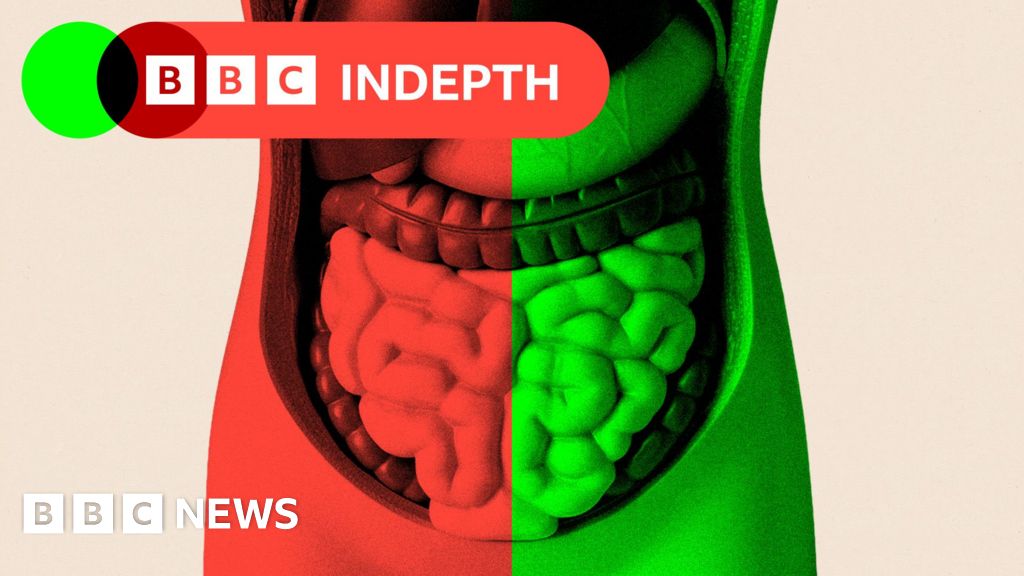
I spent months trying to find out if boosting my gut health could help me age better
1 day ago Share Save Hugh Pym Health editor Share Save
BBC
Listen to Hugh reading this article Guts have become a source of immense fascination. Social media influencers promote unproven supplements said to boost gut health, whilst milk and kombucha brands promise to nourish them with "good bacteria". Some have dismissed the gut-obsession as a passing fad - however many doctors think that our gut microbiome might affect a whole spectrum of things, from mental health to the likelihood of getting certain cancers. But there's another medical possibility that I'm particularly interested in: how our gut impacts how well (or badly) we age. Which is why, a few months ago, I found myself at St Mary's Hospital in London, famous for the discovery of penicillin, preparing to receive a nerve-wracking insight into my own gut health. I was there to meet Dr James Kinross. He's a professor in surgery at Imperial College London and a practising colorectal surgeon - but perhaps the most colourful part of his job is that he analyses people's poo.
Now that I'm in my 60s and recently became a grandparent, it seems a good time to find out what my own gut tells me about how I will fare in coming decades, says Hugh Pym (pictured with green juice as part of his food plan recommended by a dietitian)
Weeks earlier, I'd sent my own stool sample to a laboratory. Tests like these can provide insights into our gut microbiome - the trillions of microbes that live inside our stomach (including mostly bacteria, but also viruses and funghi). "I'm a microbiome evangelist," he says. "[It's] is so deeply ingrained in all aspects of our health." He believes the gut may play a crucial role in the ageing process - with consequences for how long we live, and how physically strong we remain in our elderly years. Some experts think that the importance of the gut microbiome in the ageing process has been overhyped, and everyone I speak
Continue Reading on BBC News
This preview shows approximately 15% of the article. Read the full story on the publisher's website to support quality journalism.