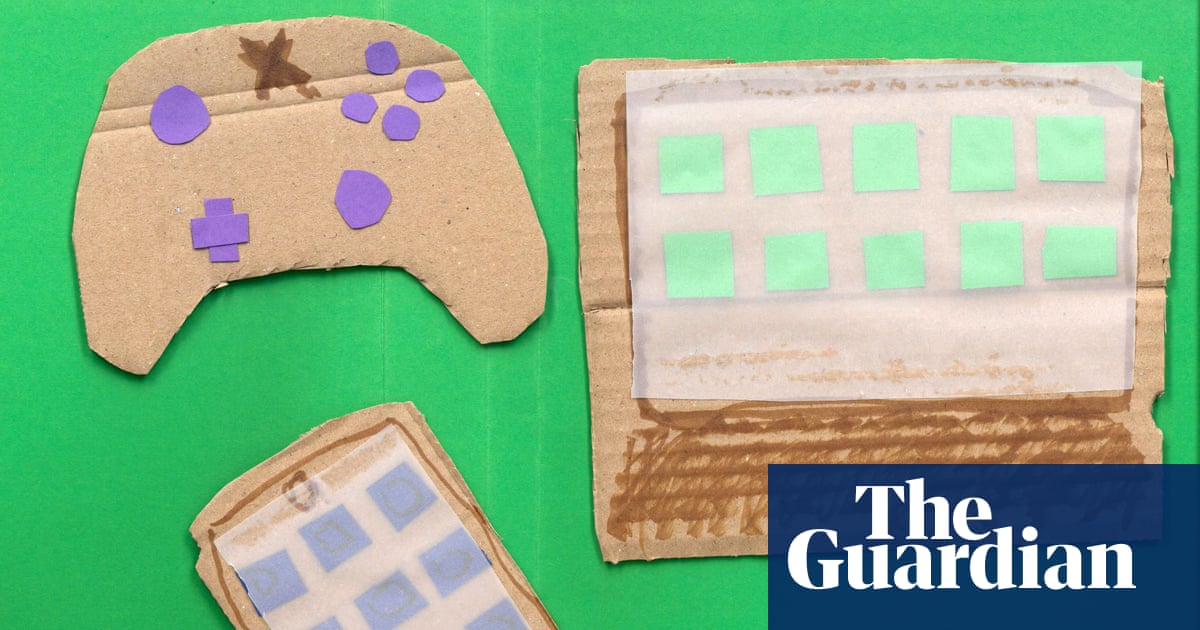
At Stoke primary school in Coventry, there are many four-year-olds among those starting in reception class who can’t sit still, hold a pencil or speak more than a four-word sentence. Lucy Fox, the assistant headteacher and head of foundations, is in no doubt what is causing this: their early exposure to screens, and a lot of it. When the children experiment with materials and creativity, and make things in the classroom, she says, “We notice a lot of children will cut pieces of cardboard out and make a mobile phone or tablet, or an Xbox controller. That’s what they know.”
At another school in Hampshire, a longtime reception teacher says in the last few years she has noticed children getting frustrated if activities aren’t instant and seamless – something she thinks comes from playing games on a phone or tablet. There is a lack of creativity and problem-solving skills, noticeable when the children are playing with Lego or doing jigsaw puzzles and turning the pieces to fit. “I find their hand-eye coordination isn’t very good, and they find puzzles difficult. Doing a puzzle on an iPad, you just need to hold and move it on the screen. They get really frustrated and I feel like there are certain connections the brain is not making any more.”
There is also something of an attitude shift, she says – a kind of individualism that she’s convinced comes from playing alone on a device. “We are having to model to children how to be with others, how you work as a team, how you share things, because they’re so used to having their own time, doing their own thing. We’re losing a big part of being human, and if these young children don’t get all those skills, they’re not going to pick them up later on.”
View image in fullscreen Creative play is crucial for brain development. Photograph: Posed by models; PeopleImages/Getty Images/iStockphoto
Earlier this month, the government announced it would be issuing new guidance on screen use for under-fives in April, after a report it commissioned found 98% of two-yea
Continue Reading on The Guardian
This preview shows approximately 15% of the article. Read the full story on the publisher's website to support quality journalism.