The nuclear power station at the centre of the political divide in Scotland
1 hour ago Share Save Paris Gourtsoyannis Westminster correspondent Share Save
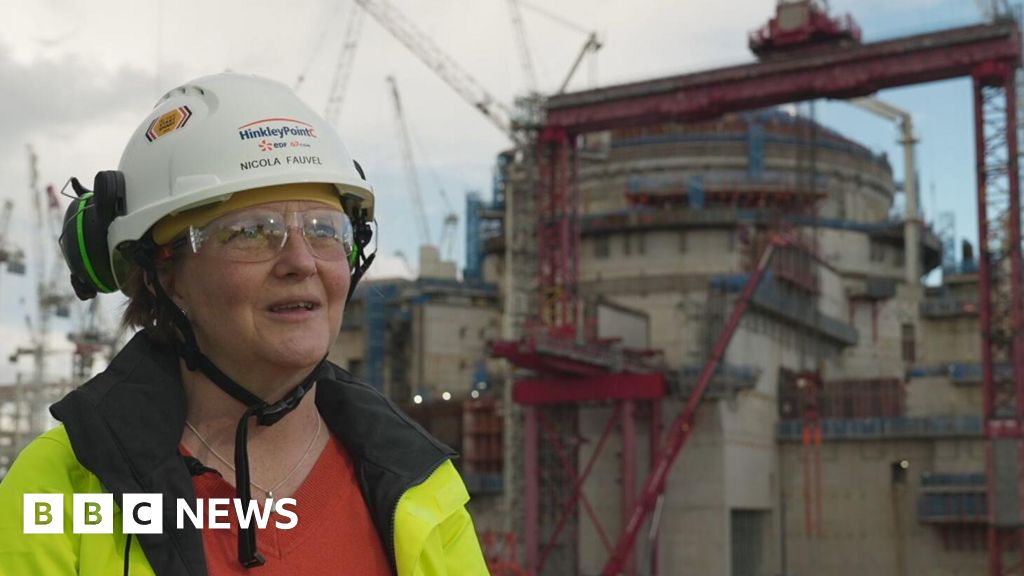
BBC Nicola Fauvel says Hinkley Point C "represents the rebirth of the nuclear industry in the UK"
Along a remote stretch of the north Somerset coast, views of rolling hills and farmhouses are suddenly interrupted by a thicket of construction cranes. Here in south west England, along the Bristol Channel, is Europe's biggest building site. Workers swarm over two enormous domed concrete structures, as the cranes dance overhead. Up close, it feels like watching a pair of ancient pyramids being built. When they are finished, the twin reactors of Hinkley Point C will form the first nuclear power plant built in the UK for 30 years. The project is part of a global nuclear renaissance and, at a cost of nearly £48bn in today's money, everywhere you look are signs of the huge investment being made by EDF - the French state-owned energy company behind Hinkley C. The site feels like a small town, with dedicated fire and ambulance stations, and its own police officers. Local butchers and farmers have been brought together to help feed the 15,000-strong workforce. The on-site training centre resembles a sleek new college building. To get staff to work without clogging rural roads with traffic, EDF even operates its own fleet of nearly 200 buses - the largest in private hands in the UK.
EDF The second nuclear reactor arrives at the under-construction Hinkley C power station
Hinkley C is also at the centre of a major political divide in Scottish politics, which is set to emerge as one of the big arguments in this year's Scottish Parliament elections.
Continue Reading on BBC News
This preview shows approximately 15% of the article. Read the full story on the publisher's website to support quality journalism.