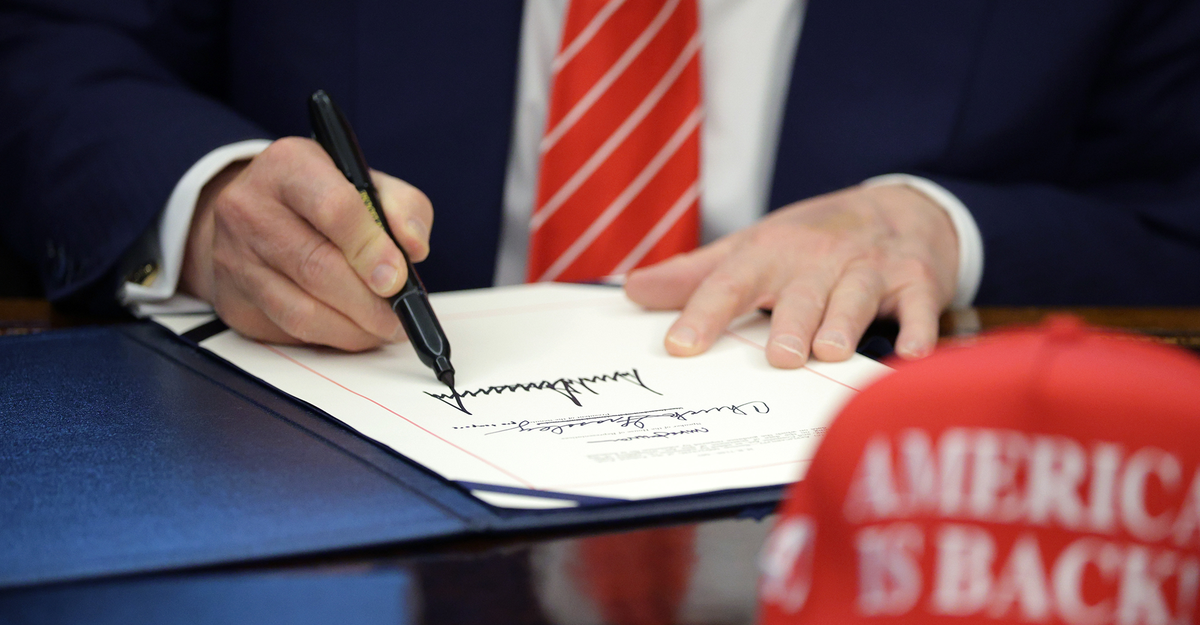
During the previous government shutdown, President Trump reveled in the chance to fire federal workers, expand his executive authority, and steer taxpayer dollars toward his allies and away from his perceived political enemies. After a record-setting 43 days of gridlock—during which Trump pursued those goals with varying degrees of success—several Democrats abandoned their quest to force Republicans to negotiate a health-care deal, and voted to end the shutdown. As he signed the bill, flanked by congressional Republicans, who had largely unified around the idea that they would not entertain a policy negotiation while the government was closed, Trump congratulated his party on a “very big victory” over the Democrats.
The second government shutdown of Trump’s second term ended today with much less fanfare and bravado from the commander in chief. This time, Trump negotiated both before and after the government was closed, going so far as to call Senate Minority Leader Chuck Schumer to work out a deal on the main point of contention: his administration’s mass-deportation campaign.
Trump is largely the same person that he was four months ago, when the previous shutdown began. (If you need evidence, in recent days, he has abruptly announced plans to close and completely rebuild the Kennedy Center, suggested that he wants to “nationalize” the midterm elections, and threatened Iran with an attack from “a massive Armada.”) But his push to quickly resolve the latest shutdown highlights how much the political landscape on immigration has shifted fol
Continue Reading on The Atlantic
This preview shows approximately 15% of the article. Read the full story on the publisher's website to support quality journalism.