How tariff disruption will continue reshaping the global economy in 2026
43 minutes ago Share Save Jonathan Josephs Business reporter, BBC News Share Save
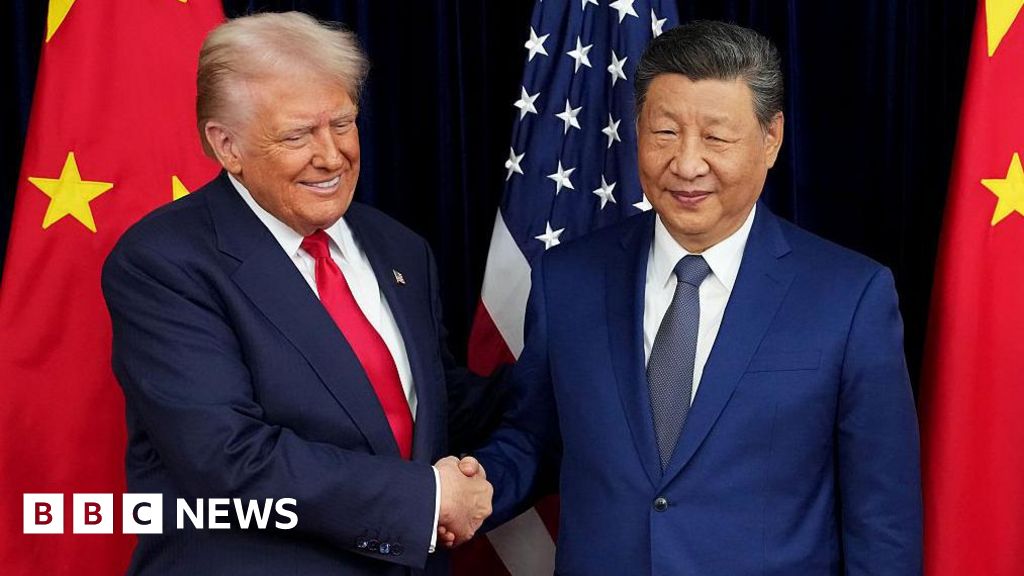
AFP via Getty Images Trade and tariffs will be on the agenda when Trump and China's Xi next meet in April
President Trump's favourite word is tariffs. He reminded the world of that in his pre-Christmas "address to the nation". With the world still unwrapping the tariffs "gift" from the first year of his second term in office, he said they were bringing jobs, higher wages and economic growth to the US. That is hotly contested. What is less debatable is that they've refashioned the global economy, and will continue to do so into 2026. The International Monetary Fund (IMF) says that although "the tariff shock is smaller than originally announced", it is a key reason why it now expects the rate of global economic growth to slow to 3.1% in 2026. A year ago, it predicted a 3.3% expansion this year. For the head of the IMF, Kristalina Georgieva, things are "better than we feared, worse than it needs to be". Speaking on a podcast recently she explained that growth had fallen from a pre-Covid average of 3.7%.
Continue Reading on BBC News
This preview shows approximately 15% of the article. Read the full story on the publisher's website to support quality journalism.