It’s a mind-blowing idea: an economic model of the world in which every company is individually represented, making realistic decisions that change as the economy changes. From this astonishing complexity would emerge forecasts of unprecedented clarity. These would be transformative: no more flying blind into global financial crashes, no more climate policies that fail to shift the dial.
This super simulator could be built for what Prof Doyne Farmer calls the bargain price of $100m, thanks to advances in complexity science and computing power.
If you are thinking this sounds crazily far-fetched, then you’re betting against a man who, with friends, beat the casino at roulette in the 1970s using the first wearable digital computer and beat Wall Street in the 1990s with an automated rapid-trading computer company that was later sold to the bank UBS.
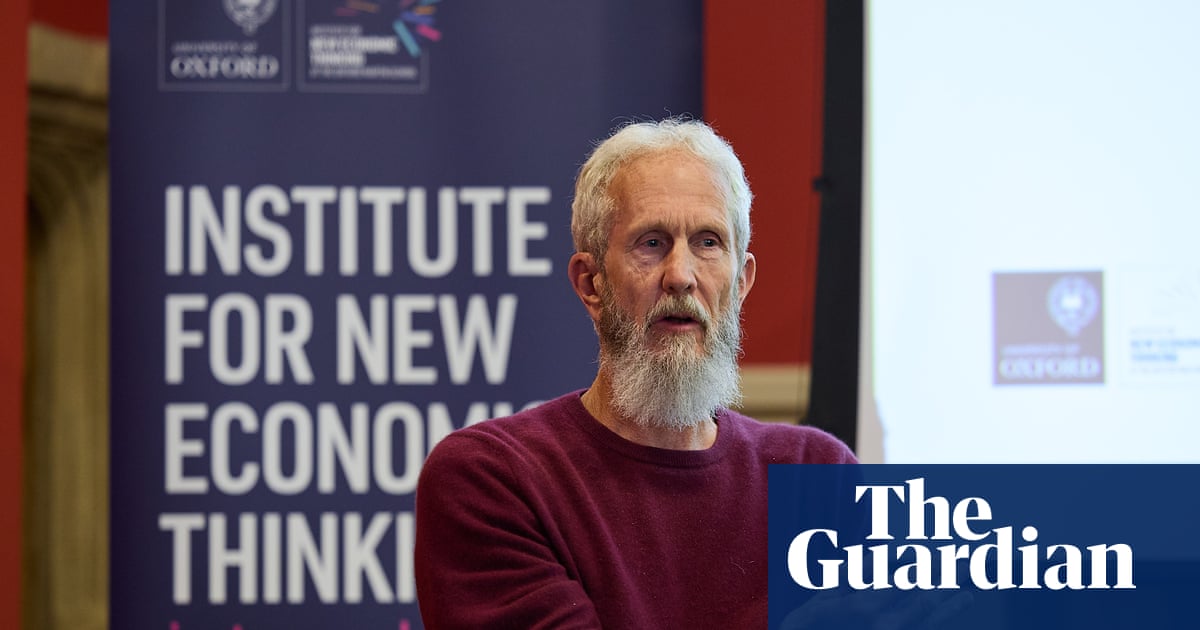
Farmer, now at Oxford University, is a softly spoken polymath, whose academic adventures have taken him from cosmology to chaos theory to theoretical biology. Now, his 50-year career has brought him to his biggest challenge yet: “We want to do for economic planning what Google maps did for traffic planning, so we can give anybody who has an economic question an intelligent and useful answer.”
Traditional economic models are either too simple to give useful forecasts o
Continue Reading on The Guardian
This preview shows approximately 15% of the article. Read the full story on the publisher's website to support quality journalism.