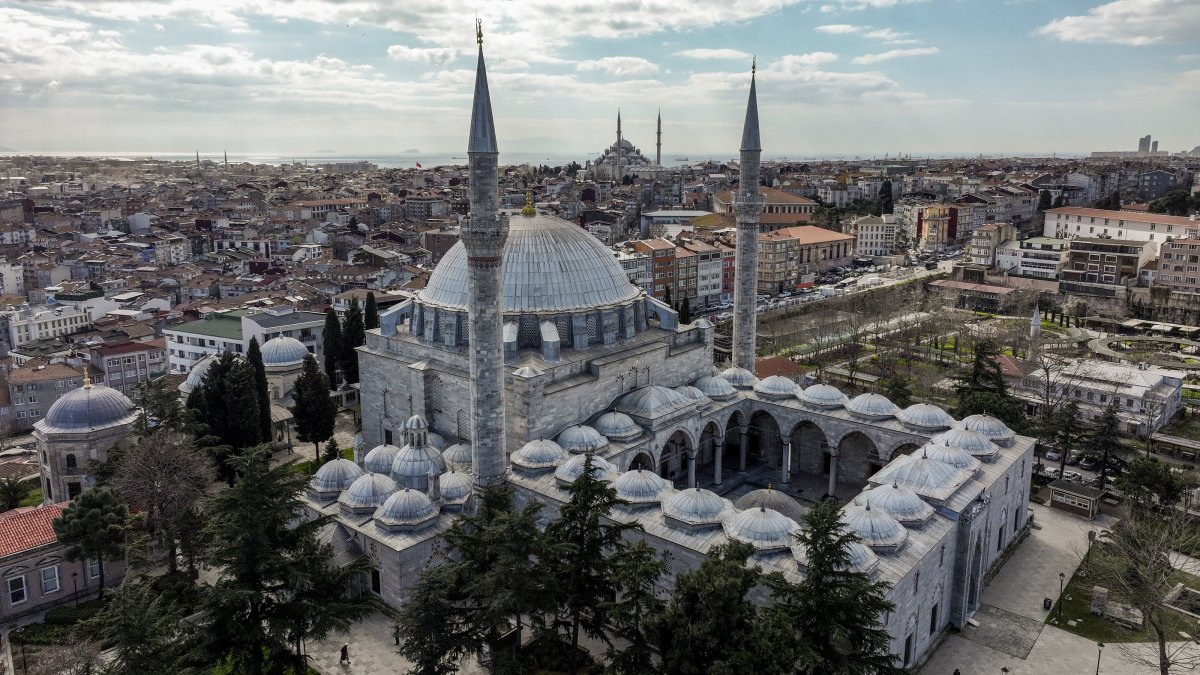
The Yavuz Sultan Selim Mosque, located on one of the hills overlooking the Golden Horn in Istanbul’s Fatih district, stands out for both its location and architectural features, and is considered among the early examples of classical Ottoman mosque architecture.
Commissioned by Ottoman Sultan Suleiman the Magnificent in honor of his father, Selim I, the mosque was completed in the 1520s.
Situated on one of Istanbul’s seven hills, the mosque occupies a high vantage point overlooking the Golden Horn, giving it a prominent place in the city’s skyline. The structure is regarded as one of the early examples of the centrally domed mosque plan in Ottoman architecture.
The prayer hall consists of a main space covered by a single large dome, supported by side walls and an arch system. The building draws attention with its balanced and simple architectural layout, while marble craftsmanship and tile decorations inside highlight its artistic value.
A view from the complex
Continue Reading on Daily Sabah
This preview shows approximately 15% of the article. Read the full story on the publisher's website to support quality journalism.